Book Launch: Heterodox Economics by Andrew Trigg

Book Launch of

by Andrew Trigg

Thursday 21 May 2026 at 5-6pm (UK time), online on MS Teams

Heterodox economics differs from orthodox or mainstream economics. It draws on a multiplicity of ideas, disciplines, methods and voices to present a more radical alternative to the dominant paradigm of neoclassical economics, which is viewed as overly narrow and unable to explain how economies actually work. 

This panel, part of the economics seminar series at The Open University, will launch and discuss Andrew Trigg’s new paperback book, Heterodox Economics. Andrew traces the heterodox tradition from its origins in the anti-capitalism ideas of the first half of the nineteenth century, through to Keynes and the present day. He shows the plurality of ideas which inform its history – including decolonialization, feminism and environmental thought – and the methodological challenge they present to mainstream economics. The book also considers the prospects for heterodox economics and whether it will continue to remain outside the citadel.

Andrew Trigg is Professor of Economics at the Open University and a founding member of the Association for Heterodox Economics (AHE).

Book details: Heterodox Economics

Speakers

Susan Newman is Professor of Economics at The Open University since 2020, with previous senior academic roles at the University of the West of England and the Institute of Social Studies, Rotterdam. Her background includes industrial policy research in South Africa and a PhD in Economics from SOAS University of London after first completing an MSci in Physics at University of Bristol.

Andrew Trigg is Professor of Economics at The Open University in the UK, and recently Visiting Professor at the University of Modena and Reggio Emilia, Italy. Andrew has co-authored and edited a string of Open University textbooks that promote economic pluralism. His core research agenda is to develop an open analytic approach to different strands of political economy: with his Routledge monograph, Marxian Reproduction Schema: Money and Aggregate Demand in a Capitalist Economy (2006), and Four Layers of Capitalism: Theory and Critique of Classical Political Economy (forthcoming with Cambridge University Press). He has been a founding member and first official co-ordinator of the Association for Heterodox Economics, which this year celebrates its 28th anniversary.

Sonal Raghuvanshi is a Senior Economist at Rethinking Economics International and has been part of the steering team of the New Political Economy Initiative at Indian Institute of Technology Bombay. Her research focuses on the political economy of development policy, especially as it relates to international financial institutions, macroeconomic policies in developing economies, and questions of structural transformation. 

Danielle Guizzo is Associate Professor at the School of Economics and a researcher at the Centre for Higher Education Transformations (CHET) at the University of Bristol, UK. She was the 2024 recipient of the Clarence E. Ayres Scholar prize, awarded by the Association for Evolutionary Economics (AFEE). Danielle’s research expertise lies at the intersection between the history of economics, economic sociology, and political economy, working on themes related to higher education, social policy, economic expertise, and pluralism. She holds a PhD in Economics & Public Policy from the Federal University of Paraná, Brazil (2016), and previously held positions at the University of the West of England (2016-2020), and the State University of Santa Catarina (2012-2015). Danielle is currently the elected President of the Association for Evolutionary Economics (AFEE), and an editorial board member of Journal of Economic Issues and Review of Political Economy.

Stephen T. Ziliak is Professor of Economics and Faculty Member of the Social Justice Studies Program at Roosevelt University in Chicago; Faculty Affiliate in the Graduate College of Colorado State University; and occasional consultant for the Angiogenesis Foundation (Cambridge, MA). Economist, historian, statistician, and PhD-trained rhetorician, Professor Ziliak is probably best known for his critically acclaimed book (with D.N. McCloskey), The Cult of Statistical Significance (2008), a foundational text for the reform of testing and estimation in economics, medicine, and other sciences. Ziliak has been an outspoken advocate of heterodox economics for nearly 30 years, delivering keynotes at AHE, ICAPE, and ASE conferences, amongst many others, and contributing to several books on the future of heterodox economics. Since 2023 he has served as Consulting Editor for Ethics and Quantitative Methods at the Journal of Business Ethics.

Jo Michell is Professor of Economics at UWE Bristol. He studied Economics at SOAS before joining UWE. His research interests include macroeconomics, finance and development.  He is Chair of the Post-Keynesian Economics Society, Council member of the Progressive Economy Forum and a Fellow of the Forum for Macroeconomics and Macroeconomic Policy of the Hans-Böckler Foundation.  

Full book cover

Dependency Theory: Contemporary Relevance and Challenges in the Current Global Crisis

International Seminar, Hybrid

11–13 May 2026

From 9am (4pm) to 4pm (11pm) – Mexico City time (Portugal/UK Time)

A bi-continental meeting: Europe–Latin America and the Caribbean

  • National Autonomous University of Mexico (UNAM) – México
  • Faculty of Economics of University of Coimbra (FEUC); Centre for Social Studies (CES); University Institute of Lisbon (ISCTE); Lisbon School of Economics and Management (ISEG) – Portugal
  • Association for Heterodox Economics (AHE) – United Kingdom
  • Latin American Council of Social Sciences (CLACSO)
  • University of Buenos Aires (UBA) – Argentina
  • Latin American Studies (LAS) of the Leiden University – Netherlands
  • European Association of Development Research and Training Institute (EADI)
  •  Young Scholar Initiative of the Institute for New Economic Thinking (YSI-INET)

In a context shaped by the reconfiguration of the world order, the intensification of geopolitical disputes, the structural financialisation of the economy, the ecological crisis, and the deepening of social inequalities, Dependency Theory has once again become an indispensable perspective for understanding the dynamics of contemporary capitalism. Far from constituting a closed chapter in Latin American thought, the dependency approach offers decisive analytical tools for interpreting the current global crisis and its implications for Latin America and the Caribbean.

This international seminar, bi-continental in scope and held in a hybrid format, brings together leading scholars with the aim of debating the contemporary relevance, renewal, and future trajectory of Dependency Theory in the twenty-first century.

Within this framework, the programme will also include the presentation of Decolonizing Economics: An Introduction (Devika Dutt, Carolina Alves, Surbhi Kesar, and Ingrid Harvold Kvangraven). The book examines the Eurocentric foundations that have shaped the economics discipline and constrained its capacity to engage with phenomena such as structural racism, uneven development, the climate crisis, and labour relations. It proposes “decolonising” economics by challenging the norms of neutrality and objectivity from which the discipline often claims to speak, and by opening space for approaches that take structural power, exploitation, and colonial legacies seriously. This session will include discussion by leading thinkers from the Latin American tradition of Dependency Theory and is conceived as a direct dialogue with the seminar’s thematic strands—particularly in rethinking the political economy of global capitalism from non-Eurocentric frameworks.

Strand 1. The historical development and contemporary relevance of Dependency Theory

This strand addresses the historical development and contemporary relevance of Dependency Theory, examining its main analytical categories, internal debates, and explanatory power in the face of recent transformations in global capitalism.

Strand 2. (Neo-)imperialisms, geopolitical tensions, and international economic relations from a dependency perspective

This strand analyses (neo-)imperialisms, geopolitical tensions, and international economic relations from a dependency perspective, interrogating global power configurations, inter-power rivalry, and the place of the periphery within the emerging world architecture.

Strand 3. New theoretical and methodological horizons: Dependency Theory as a framework for the contemporary world structure

This strand explores new theoretical and methodological horizons to consolidate Dependency Theory as an analytical framework for today’s world structure, engaging with debates on financialisation, extractivism, global value chains, the ecological crisis, and transformations of work.

More than a commemorative exercise, this seminar advances a strategic discussion: to think dependency today is to think about the conditions of possibility for sovereignty, development, and emancipation in a contested world.

  • Adrián Sotelo, National Autonomous University of Mexico (UNAM)
  • Ana Grondona, University of Buenos Aires (UBA)
  • Claudio Katz, University of Buenos Aires (UBA)
  • Diego Giller, National University of General Sarmiento (UNGS)
  • Emir Sader, Federal University of Rio de Janeiro (UFRJ)
  • José G. Gandarilla, National Autonomous University of Mexico (UNAM)
  • Juan Manuel Contreras, Autonomous University of Mexico City (UACM)
  • Marcelo Dias Carcanholo, Fluminense Federal University (UFF)
  • Mariano Treacy, National University of General Sarmiento (UNGS)
  • Mónica Bruckmann, Federal University of Rio de Janeiro (UFRJ)
  • Nildo Ouriques, Federal University of Santa Catarina (UFSC)*
  • Raúl Delgado Wise, Autonomous University of Zacatecas (UAZ)
  • René Ramírez, Latin American Council of Social Sciences (CLACSO) and National University of the Arts (UNA)
  • Roberto Escorcia Romo, Metropolitan Autonomous University (UAM)
  • Sebastián Sztulwark, National University of General Sarmiento (UNGS)
  • Andrew Fischer, International Institute of Social Studies (ISS)
  • Carla Coburger, University of Duisburg-Essen (UDE)
  • Devika Dutt, King’s College London (KCL)
  • Fabio Maldonado, King’s College London (KCL)
  • Ingrid Harvold Kvangraven, King’s College London (KCL)
  • Jonas Van Vossole, Centre for Social Studies (CES)
  • Luís Mah, University Institute of Lisbon (ISCTE)
  • María Gabriela Palacio, Leiden University (LU)
  • Patrick Mokre, Vienna University of Economics and Business (WU Vienna)
  • Rogelio Madrueño, University of Bonn
  • Rui Costa Santos, University of Granada (UGR)

* To be (re)confirmed.

Ernesto Nieto-Carrillo (FEUC-AHE), René Ramírez (CLACSO-UNA), Adrián Escamilla Trejo (UNAM), María Gabriela Palacio (LU), Ana Santos (CES), Roberto Ruiz Blum (FEUC), Gabriela Riera (ISCTE).

Book launch of “Marx’s Theory of Value at the Frontiers”

by Güney Işıkara and Patrick Mokre

Join us on Wednesday 12th November 2025 (5:00-6:30pm) at Goldsmiths, University of London, for the launch of “Marx’s Theory of Value at the Frontiers: Classical Political Economics, Imperialism and Ecological Breakdown”, the new book by Güney Işıkara and Patrick Mokre.

Summary:
The book examines the unequal exchange of labour in the global economy. Drawing on the works of Marx, Sraffa, Pasinetti, and Shaikh, the authors develop a novel empirical approach to measuring unequal exchange on a global scale. The book makes a major contribution to debates on dependency theory, uneven development, and core-periphery relations.

It demonstrates that the classical political economists’ approach to value and prices, which finds its most advanced formulation in Marx, sheds light on the source of profits, exploitation, whether equivalents are exchanged in trade, dynamics of asymmetric and uneven accumulation, and the relationship of production to non-human natures at large. Understanding these phenomena is key to understanding the economic regularities underlying the key issues facing the world in the twenty-first century: imperialism and ecological breakdown. It argues powerfully that deviations between market prices, production prices, and labor values are central to understanding international value transfers due to differential capital compositions and rates of exploitation, as well as the central role of rent and accumulation in capitalism-induced ecological crisis.

The book is structured to provide an understandable introduction to the classical approach to value and prices, and its modern expression in empirical applications making it of great interest to readers in Economics, Political Economy, Politics and Sociology.

You can purchase the book via this link.

Speaker bio:

Patrick Mokre works at the Austrian Federal Chamber of Labour in Vienna. He received his PhD in Economics from the New School for Social Research in 2022. Patrick’s research gravitates around the political economy of labor, inequality, and capitalism. Within the AHE, Patrick is one of the coordinators of the Quantitative Political Economy stream.

Event schedule (90 minutes):
[1] Welcome and opening remarks – Ragu Venkatachalam (5 mins)
[2] Introducing the speakers – Tomas Rotta (5 mins)
[3] Book presentation – Patrick Mokre (40 mins)
[4] Comments – Ingrid Kvangraven, King’s College London (15 mins)
[5] Q&A (25 mins)
[6] Drinks at a local pub from 6:30pm

The speakers will aim to make it engaging for both economists and non-economists.

Date and time:

12th November 2025 at 5:00-6:30pm (Wednesday)

Goldsmiths, University of London, Deptford Town Hall, room G-16 (ground floor). Click here to see the venue on Google Maps.

No need to register, you can just walk in when you arrive. The event will not be recorded or streamed online. This will be an in-person event only.

Click here to view the event webpage.

Sponsors:
The event is sponsored by the Structural Economic Analysis Research Unit at Goldsmiths, University of London, and the Association for Heterodox Economics.

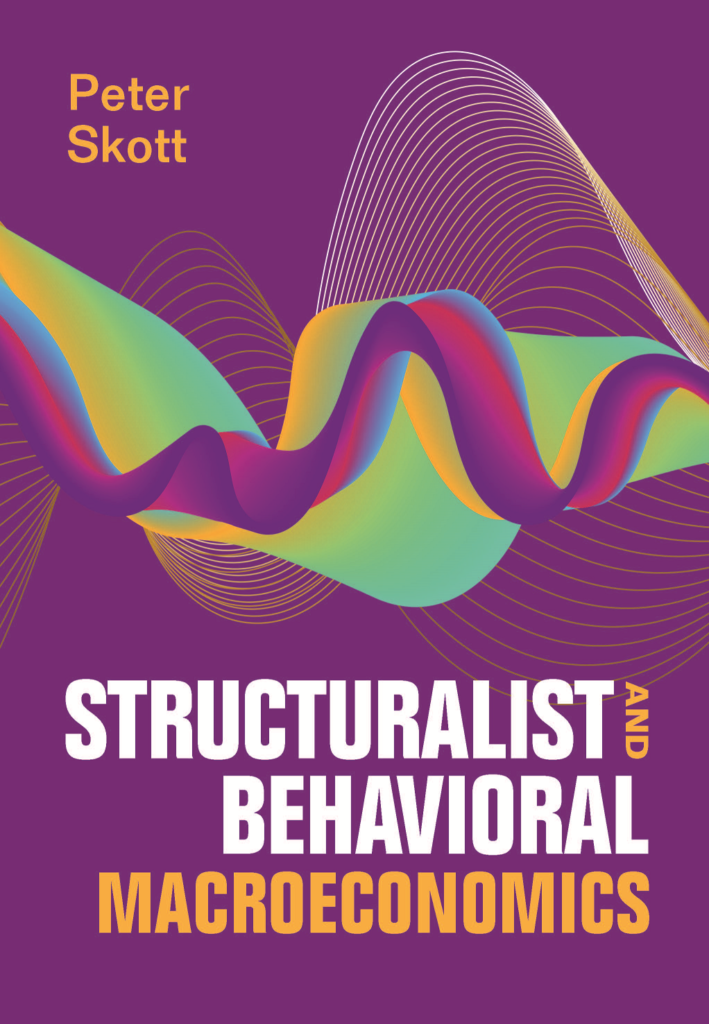
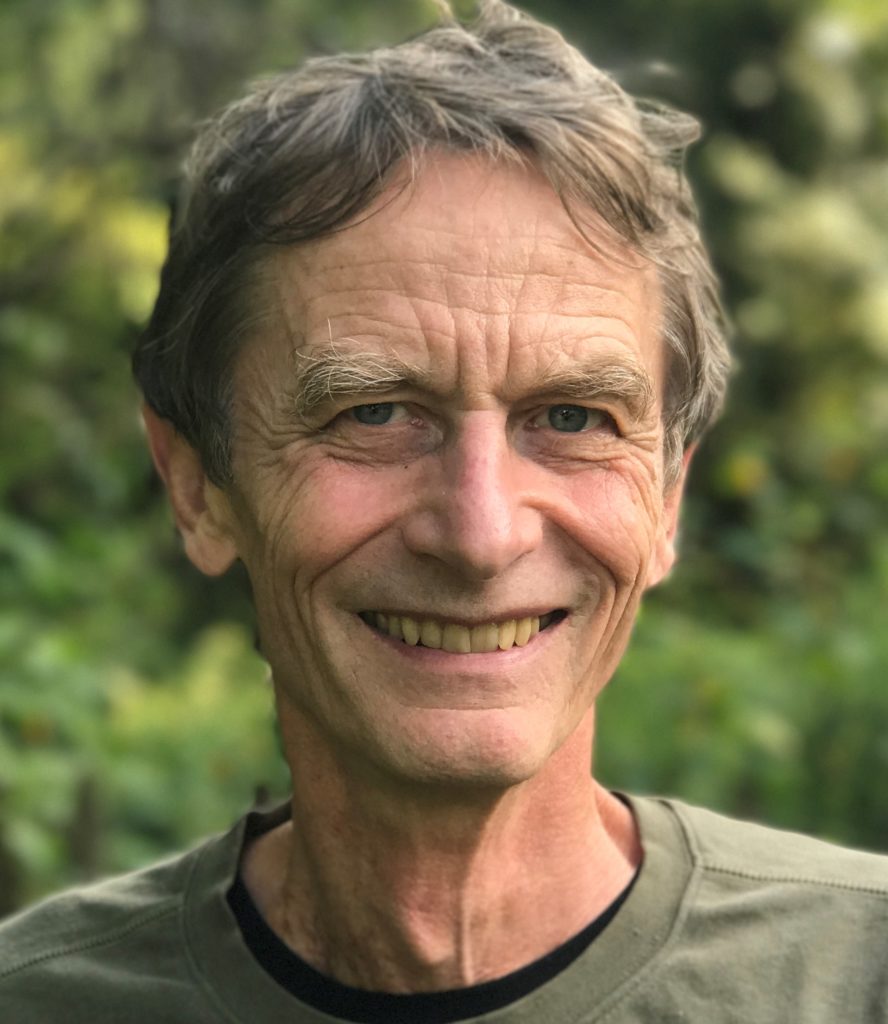
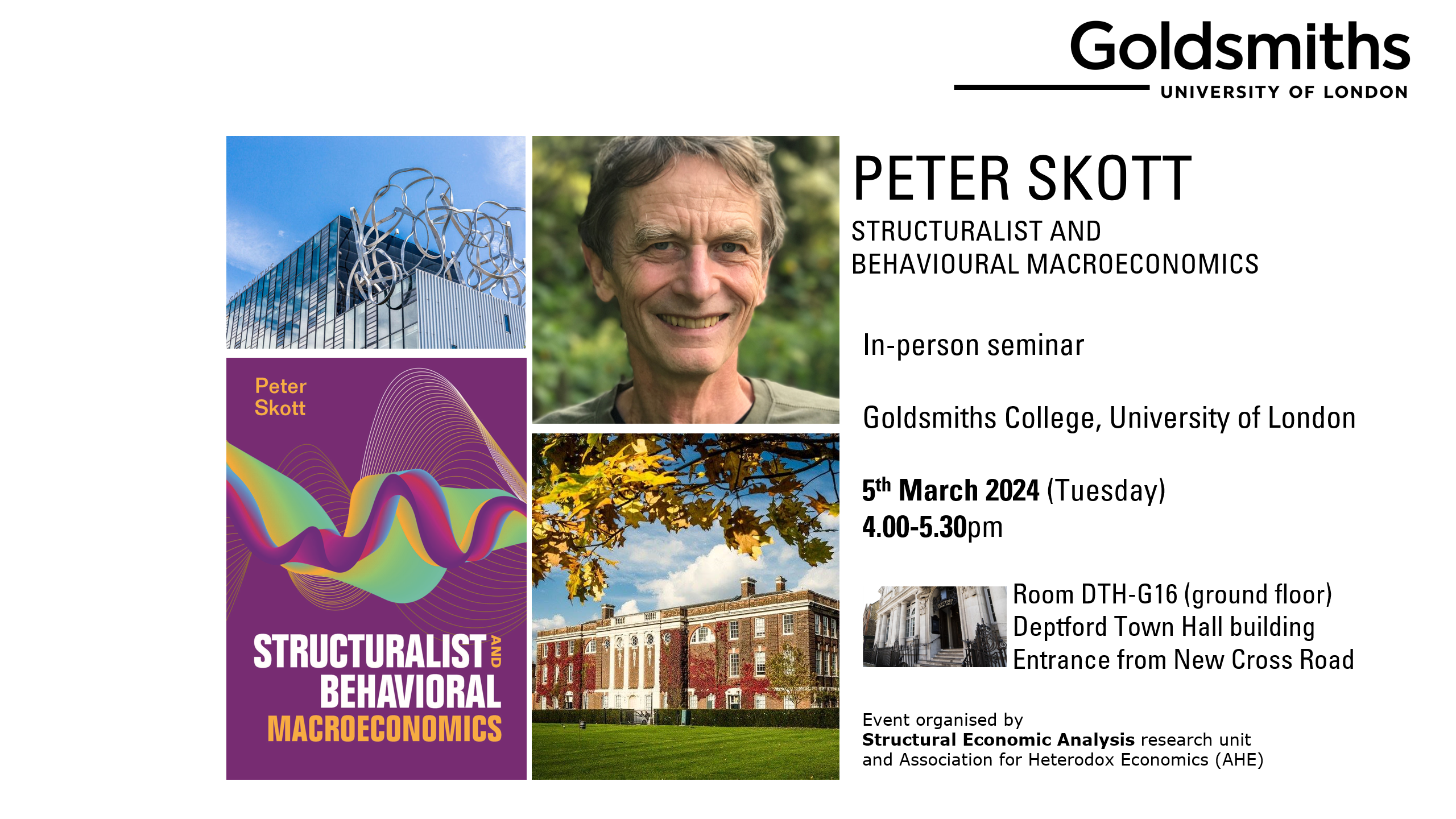
Structuralist and Behavioral Macroeconomics: Seminar with Professor Peter Skott

Professor Peter Skott will deliver a seminar on his new book Structuralist and Behavioral Macroeconomics

Date: 5th March 2024 (Tuesday)

Time: 4.00-5.30pm, London time, followed by drinks and dinner at The Rose (at own expense)

Seminar location: Goldsmiths College, University of London. Room DTH-G16 (Deptford Town Hall building, ground floor, entrance from New Cross Road). Click here for map.

Book summary:

Mainstream macroeconomics is founded on the idea of perfectly rational representative agents. Yet there is a growing realisation that economic theories based on such agents are inadequate guides to real-world decision making. The behavioural evidence has had significant impacts on microeconomics but the same cannot be said of macroeconomics. This book is part of the movement to do for macroeconomics what behavioural thinking has done for microeconomics. Using behavioural evidence and insights from Keynesian and institutionalist traditions, it presents an empirically grounded alternative to the paradigm that currently dominates macroeconomic theory. It highlights how dynamic interactions across markets can generate instability, endogenous cycles and secular stagnation. It fully engages with macroeconomic theory, provides a multi-faceted view that explains how and why it is time to rethink its foundations and offers a path forward.

Peter Skott is Professor Emeritus at the University of Massachusetts Amherst and Professor of Economics at Aalborg University. Before moving to UMass in 2003, he held positions at Copenhagen University (1981-1987) and Aarhus University (1987-2003). His research interests fall primarily within macroeconomics, with contributions on a range of topics, including economic growth and development, business cycles, inflation, and the distribution of income. His general approach draws on the (post-) Keynesian, (neo-) Marxian and institutional traditions as well as behavioral economics; a recent book on Structuralist and Behavioral Macroeconomics (Cambridge University Press, 2023) synthesizes some of his work on core macroeconomic issues.

The seminar will be held in person at Goldsmiths. Click here for more information about the event.

No need to register. When you arrive at the reception desk, tell the concierge that you are attending the seminar in room DTH-G16, which is just behind the reception desk on the ground floor.

This seminar is organised by the:

Structural Economic Analysis research unit at Goldsmiths

Association for Heterodox Economics (AHE)