Registrations Open for the AHE Conference in Coimbra, Portugal, 1-3 July 2026

Registration for the AHE conference is now open on our website until the 10th June 2026. Presenters should register by this date to be included in the final conference programme.

Please read carefully the payment instructions on the website (3-step process) and our cancellation policy before proceeding with the purchase. The full registration price is £180, and your ticket includes the annual AHE membership fee, the conference dinner and catering throughout the event.

If you are based in the Global South, the AHE will email you a discount coupon worth £40. If you are a student or part-time academic, the AHE will email you a discount coupon worth £40. If both discount categories apply to you, e.g. a student based in the Global South, you will receive by email two discounts coupons which you can use jointly to obtain a total discount worth £80. The AHE is unable to partially refund scholars who fail to use discount coupons they are entitled to. All discount coupons must be applied prior to purchase.

Early career researchers who requested travel support in their submissions will be contacted separately by the Organising Committee about the decisions. Please refrain from contacting us via email.

The conference will take place from 1–3 July 2026 at the Faculty of Economics of the University of Coimbra (FEUC), in the Celas/Olivais area of Coimbra, Portugal. FEUC is served by local bus lines 4, 37 and 103, and can also be reached easily by taxi or ride-hailing services. Google Maps link: https://maps.app.goo.gl/3sdLGhUjeEwD5CPv6

Please consult the Travel Information section down below for how to get to Coimbra, visa requirements, and a list of discounted accommodation options. Coimbra is a popular tourist destination in July, and therefore we strongly encourage you to book your accommodation early.

If you require an acceptance letter on AHE letterhead for visa purposes, please fill in this form to generate an automated letter.

The conference organisation will not be responsible for providing accommodation or cover your costs of travel and stay.

Once registrations close, we will contact participants with the final programme schedule.

Click here to download the travel information guide in PDF format.

The conference will take place at FEUC, University of Coimbra, in the Celas/Olivais area of Coimbra.

Faculty of Economics, University of Coimbra (FEUC): Av. Dr. Dias da Silva, 165, Celas, 3004-512 Coimbra, Portugal

Local public transport to FEUC: SMTUC bus lines 4, 37, and 103

If your institution uses eduroam, it is worth configuring it before departure. FEUC’s teaching block, library, and several public areas are covered by the eduroam wireless network.

FEUC location and contacts: https://www.uc.pt/en/feuc/contacts-location/

Google maps: https://maps.app.goo.gl/3sdLGhUjeEwD5CPv6

Coimbra is centrally located, around 200 km from Lisbon and 120 km from Porto. Official tourism guidance highlights fast road connections, an efficient rail network, and proximity to the two main international airports.

  • Train: Alfa Pendular and Intercidades services connect Coimbra-B with Lisbon (about 1h45) and Porto (about 1h15). Coimbra-B is the long-distance station.
  • Bus: Rede Expressos and FlixBus operate regular services from Lisbon, Porto, and other cities. The Coimbra bus station is next to the city centre.
  • Airports: the nearest major airports are Lisbon Humberto Delgado (LIS) and Porto Francisco Sá Carneiro (OPO).
  • Private transfer: Coimbra Airport Shuttle offers shared and private transfers between Coimbra and Lisbon/Porto airports.

Visit Coimbra – How to get: https://visitecoimbra.pt/en/practical-guide/how-to-get/

CP train times and tickets: https://www.cp.pt/passageiros/en

Rede Expressos: https://rede-expressos.pt/en

Coimbra Airport Shuttle: https://www.airportshuttle.pt/

From Lisbon Airport (LIS) to Coimbra and FEUC

A practical rail-first route is Lisbon Airport -> Metro Red Line -> Oriente -> Alfa Pendular or Intercidades to Coimbra-B.

  • Lisbon Airport is linked to Oriente on the Metro Red Line, and Oriente is a main CP rail station on the North Line.
  • From Coimbra-B, continue to FEUC by taxi or local bus.
  • Direct coach options from Lisbon to Coimbra are also available if bus schedules suit your arrival time better.
  • Taxi or ride-hailing all the way from Lisbon is possible, but usually unnecessary unless you are sharing or arriving at an awkward hour.

Lisbon Metro – Oriente: https://www.metrolisboa.pt/viajar/oriente/

From Porto Airport (OPO) to Coimbra and FEUC

From Porto Airport, the simplest options are a direct coach to Coimbra or a metro-plus-train/coach transfer through Porto.

  • Direct coach services from Porto Airport to Coimbra are available.
  • Metro do Porto Line E is the airport line and can be used to connect into Porto for onward rail or coach travel to Coimbra.
  • From Porto city, CP services connect Porto and Coimbra in about 1 hour.
  • Once in Coimbra, use taxi or SMTUC to reach FEUC.

Porto Metro (Line E) information: https://www.metrodoporto.pt/

From Coimbra-B or the Coach Station to FEUC

  • Coimbra-B is the station for long-distance trains. CP notes that it interfaces with SMTUC buses at Coimbra-B, and the coach station is also close to the city centre.
  • If you are carrying luggage, a taxi from Coimbra-B or the coach station to FEUC is usually the simplest option.
  • FEUC is served by SMTUC lines 4, 37, and 103.
  • If you stay in Celas or Solum, the venue is usually a short taxi, bus, or walk away.
  • Coimbra Tourism presents Coimbra as a “15-minute city”, and the local bus network covers the city well for conference travel.
  • SMTUC buses offer broad coverage across Coimbra and neighbouring parishes.
  • For occasional travel, SMTUC sells pre-loaded tickets on the Viagem conVIDA card.
  • Intermodal 1-day, 3-day, and 7-day tickets are also available.
  • Validate your ticket on every trip.

Visit Coimbra – Moving around the city: https://visitecoimbra.pt/en/practical-guide/move-around-the-city/

SMTUC products and tickets: https://www.smtuc.pt/produtos/

If you are coming from outside the Schengen Area, you may require a visa:

The reference guide’s health section is worth keeping. Portugal’s public system can handle emergencies, but the right preparation depends on your coverage.

  • If you are eligible for an EHIC (European Health Insurance Card) or equivalent public reciprocal-healthcare card (Provisional Replacement Certificate), bring it.
  • The EHIC covers medically necessary state-provided healthcare during a temporary stay under the same conditions and at the same cost as locals; it does not replace travel insurance or cover private care.
  • If you are not covered by an EHIC-style arrangement, arrange travel medical insurance before departure.
  • For a serious emergency, call 112.
  • For urgent but non-life-threatening health advice and triage, call SNS 24 on 808 24 24 24.

European Health Insurance Card information: https://employment-social-affairs.ec.europa.eu/policies-and-activities/moving-working-europe/eu-social-security-coordination/european-health-insurance-card_en

SNS general contact lines: https://www.sns.gov.pt/sns-saude-mais/linhas-de-atendimento-gerais/

  • Municipal Tourist Office – Old Coimbra Station A
  • António Granjo Street No. 6, 3000-429 Coimbra, Portugal
  • Monday-Friday 09:30-13:00 and 14:00-16:30 (closed weekends and holidays)
  • Phone: +351 239 857 500
  • Email: tourism@cm-coimbra.pt

Visit Coimbra: https://visitecoimbra.pt/en/

As in the reference guide, the main accommodation choice is whether to stay close to the venue or in the historic centre.

Near FEUC: Celas and Solum are the most convenient areas. Celas centres on Avenida Dias da Silva and the hospital area; Solum is known for services and easy accessibility.

Historic-centre option: Baixa / central Coimbra gives you quicker access to monuments, restaurants, and transport, with a slightly longer commute to FEUC.

Book early: early July is summer travel season and availability can tighten.

Visit Coimbra – Where to stay: https://visitecoimbra.pt/en/practical-guide/where-to-stay/

[1] Penedo da Saudade Suites & Hostel:

    Offers a 10% discount to all participants who use the code “AHE2026” when booking through the official platform. For reservations and more information about the accommodation unit: https://www.penedodasaudade.pt/.

    [2] Pousada da Juventude Coimbra

    Offers a 10% discount to all participants who explicitly refer to the Association for Heterodox Economics Conference 2026 when booking via email at coimbra@movijovem.pt. For reservations and more information about the accommodation unit: https://www.pousadasjuventude.pt/pt/pousadas/pousada-de-coimbra/

    [3] Hotel Mondego

    Offers a 5% discount to all participants who explicitly refer to the Association for Heterodox Economics Conference 2026 when booking via email at info@hotelmondego.com or by phone at +351 239 496 239. For reservations and more information about the accommodation unit: https://hotelmondego.com/

    [4] Hotel Botânico de Coimbra

    Offers a 10% discount to all participants who explicitly refer to the Association for Heterodox Economics Conference 2026 when booking via email at geral@hotelbotanicocoimbra.pt. For reservations and more information about the accommodation unit: https://hotelbotanicocoimbra.pt/

    [5] Hotel Astoria

    Offers a 10% discount to all participants who use the code “AHE26FEUC” when booking through the official platform. For reservations and more information about the accommodation unit: www.almeidahotels.pt

    [6] The Zero Hotels

    Offers a fixed nightly rate of €50 to all participants who use the code “AHE2026” when booking through the official platform. Rate excludes breakfast and tourist tax. Tourist tax of €1 per person per night. Breakfast available for €9 per person per night. For reservations and more information about the accommodation unit: https://coimbra.thezerohotels.com/

    [7] Hotel Ibis Coimbra Centro

    Offers a 10% discount to all participants who explicitly refer to the Association for Heterodox Economics Conference 2026 when booking via email at h1672@accor.com. For reservations and more information about the accommodation unit: https://all.accor.com/hotel/1672/index.pt.shtml

    Call for Streams for the 28th Annual Conference of the Association for Heterodox Economics (AHE)

    1-3 July 2026

    University of Coimbra, Portugal

    We invite submissions of streams for the 28th Conference of the Association for Heterodox Economics, taking place from 1st to 3rd July 2026 at the University of Coimbra in Portugal. This is an event organised in collaboration with the Faculty of Economics at the University of Coimbra. 

    The AHE conference seeks to support scholarship, activism, reflection, and debate on innovative and diverse heterodox and radical understandings of the global political economy. In the midst of multiple crises, including environmental breakdown, genocide, mental health crises, rise of authoritarianism, and crises of social reproduction, heterodox and radical approaches to economics and political economy are crucial for grappling with the challenges we face. We welcome submissions that challenge conventional economic paradigms, offer alternative frameworks for understanding and navigating these complex crises, and actively work towards radical social change.

    What is a stream?

    A stream is a session or series of sessions held at the conference organised on a specific theme. The stream coordinator(s) will propose a theme for their stream and be responsible for selecting which papers and panels should be included in their stream from the regular call for papers (which may include roundtable and panel proposals too), organising the papers into sessions, and ensuring that there is a chair for each session. The AHE Academic Officers will be responsible for final decisions on paper selections, sending out acceptance letters, visa letters, and finalising the programme schedule. Do please note that stream coordinators are expected to attend the conference and engage with the session(s) of their streams. AHE does not cover travel expenses or conference fees. Should there be multiple similar stream proposals, we reserve the right to merge streams. 

    The streams will typically involve one or more sessions that are based around 3-4 papers, optionally with a discussant(s). As stream coordinator(s), you may encourage your presenters to submit full papers in advance and/or agree on a post-conference publication plan, but this is optional. In the interest of encouraging discussions across theoretical traditions or schools of thought, we especially encourage streams organised by theme or topic rather than by discipline/theoretical tradition. However, streams organised by theoretical tradition will also be considered. We expect stream coordinators to especially encourage women, people of colour, early career scholars, and scholars based in the Global South when they advertise their stream for potential submitters. The AHE Conference Organising Committee may advise the stream coordinators on issues of equality, diversity and inclusivity. 

    The call for streams is a call for themes to which others will submit abstracts during the Call for Papers, rather than a call for the submission of closed panels. However, we do encourage coordinators to give examples of papers they foresee will be included in their stream, if possible.  Possible stream topics could include (but are certainly not limited to): Climate change, labour, money, finance, innovation, gender, race, economic development, economic and social policy, imperialism, economic history, history of economic thought, economics education, philosophy and methodology in economics. We encourage each stream proposal to list a minimum of two stream coordinators. 

    Timings

    The Call for Streams is open until 21 November 2025. Decisions about stream proposals will be made by the AHE Conference Organising Committee and communicated to all proposing stream organisers by 1 December in time for the opening of the call for papers in mid-December. The Call for Papers deadline will be 14 February 2026. It will also be possible to submit individual panels and roundtables to the CfP to be considered for stream coordinators. Once the CfP has closed, stream organisers will be contacted with the submissions to their stream. Thereafter, they will have three weeks to evaluate the submissions and communicate their recommendations to the AHE Conference Organising Committee. This schedule will allow us to send out acceptances to presenters by early April 2025

    The conference will be in-person only. 

    The deadline for stream proposals is 21 November 2025.

    If you need ideas or a template, you can view the streams approved for the 2025 AHE Conference at King’s College London here.

    Save the Date: AHE Conference in Coimbra, Portugal, on 1st-3rd July 2026

    Save the Date:

    The next annual conference of the Association for Heterodox Economics will be held at the University of Coimbra, Portugal, on 1st-3rd July 2026.

    Save the date on your calendars!

    Click here to view the University of Coimbra on Google Maps, so you can begin planning your trip for July 2026.

    Click here to see some pictures of our past conferences.

    Recordings from the 2025 AHE Conference Plenaries

    18-20th June 2025 at King’s College London, UK

    Plenary 1: Shifting Global Infrastructures: From Logistics to the Dollar

    Alex Colas, Birkbeck, University of London
    Ramaa Vasudevan, Colorado State University
    Chair: Devika Dutt, King’s College, London

    Plenary 2: Palestine: Imperialism, Fossil Capitalism, and Race

    Adam Hanieh, University of Exeter
    Rafeef Ziadah, King’s College, London
    Rob Knox, University of Liverpool
    Chair: Susan Newman, Open University

    Note that the video from this plenary appears from about minute 11:00.

    Plenary 3: Expanding the Frontiers of Extraction: Social Reproduction

    Rebecca Carson, Royal College of Art
    Lucy van der Wiel, King’s College, London
    Chair: Sheba Tejani, King’s College, London

    Visit the AHE channel on Youtube for more videos!

    AHE 2025 Conference Programme

    18-20 June 2025 at King’s College London (Waterloo Campus)

    The 27th Conference of the Association for Heterodox Economics will take place on June 18-20, 2025 at King’s College London (Waterloo Campus), in London (UK). This is an event organised in collaboration with the Department of International Development at King’s College London

    The AHE conference seeks to support scholarship, reflection, and debate on innovative and diverse heterodox and radical understandings of the global political economy. In the midst of multiple crises, including environmental breakdown, genocide, mental health crises, rise of authoritarianism, and crises of social reproduction, heterodox and radical approaches to economics and political economy are crucial for grappling with the challenges we face. We welcome participants that challenge conventional economic paradigms, offer alternative frameworks for understanding and navigating these complex crises, and actively work towards radical social change.

    Sponsors

    The 2025 AHE conference has received support from:

    Registration

    Registration for presenters has closed on 16th May. Tickets for non-presenting participants (starting from £60 per day) can be purchased in person at the registration desk during the conference. The 2025 AHE conference will be in-person only.

    Programme

    The latest version of the conference programme and complete list of presenters in each stream is available here.

    Speakers

    Rafeef Ziadah, Senior Lecturer in Politics and Public Policy (Emerging Economies) in the Department of International Development at King’s College London. Rafeef’s research centers on the production of interdisciplinary scholarship that falls into three thematic areas: infrastructures and logistics, gender and feminism, race and racialisation. Her recent research is broadly concerned with the political economy of maritime infrastructures and logistics, with a particular focus on the Middle East and East Africa.

    Adam Hanieh, Professor of Political Economy and Global Development at the Institute of Arab and Islamic Studies (IAIS), University of Exeter, and Joint Chair in Middle East Studies at the Institute of International and Area Studies (IIAS) at Tsinghua University, Beijing, China. Adam’s current research focuses on oil and capitalism, energy transitions, and the political economy of the Middle East.

    Robert Knox, Senior Lecturer in the School of Law and Social Justice at the University of Liverpool. Robert’s research interests broadly encompass the relationship between law and the political-economic structures of capitalism. He has specific expertise on public international law, particularly on its relationship to race and empire; public law, with a focus on its relationship to neoliberalism, and legal theory, especially critical and Marxist approaches to the law.

    Lucy van de Wiel, Lecturer and Postgraduate Research Director in Global Health and Social Medicine at King’s College London. She has founded and is chair of the Reproduction Research Cluster at King’s. Her research focuses on the introduction of new reproductive technologies such as egg freezing, IVF, and embryo selection. She explores how these technologies give insight into broader developments within the sector, including the datafication of reproduction and the financialisation of fertility. She also researches telemedical abortion in the post-Roe landscape.

    Rebecca Carson, theorist working in Marxism and philosophy and the author of ‘Immanent Externalities: The Reproduction of Life in Capital’. Rebecca is a Tutor at the Royal College of Art. She completed a PhD in Philosophy at the Centre for Research in Modern European Philosophy (CRMEP), Kingston School of Art and publishes regularly on Social Reproduction Theory.

    Alex Colas, Professor of International Relations in the School of Social Sciences at Birkbeck College, University of London. Alex has published on subjects ranging from piracy, food politics, Spanish responses to terrorism, imperialism, internationalism and global governance. Alex directs the MSc in International Security and Global Governance and the MSc in Food, Politics and Society. He teaches courses on Global Politics, Governance and Security; Food, Politics and Society, and How the West Was Made: Transformations in Global Politics. 

    Ramaa Vasudevan, Professor of Economics at Colorado State University, USA. Ramaa’s main research interests are in international finance , open economy macroeconomics, the political economy of development and finance, and Marxian and Classical Political Economy. Her Ph.D. in economics from New School University, New York, focused on the political economy of international trade and finance, while her M.Phil at the Centre for Development Studies, Trivandrum, India, was a study about the evolution of labor markets in colonial India.

    Dinner

    The conference dinner will be on Thursday 19th June at the Mamuska restaurant in Southbank Waterloo. The address is 9 Addington St, London SE1 7RY. We will start gathering at 18:30 and food will be served at around 19:15.

    Conference venue and arrival

    The conference will be held at King’s College London, Waterloo Campus, Franklin-Wilkins Building.

    The address is: 150 Stamford St, London SE1 9NH

    Signs for the AHE conference registration desk will be on the Franklin-Wilkins Building entrance.

    The conference will begin on Wednesday 18th June 2025. The registration desk will open at 9:30am (Franklin-Wilkins Building, ground floor), followed by the Opening Ceremony at 10:15am in the Auditorium.

    All sessions will take place in the Franklin-Wilkins Building, across rooms on the ground and first floors. The rooms are G54, G56, G75, G72, G80, 50A, 50B, G7, and the FWB Auditorium.

    For 2-hour sessions with four presentations, we recommend allocating 20 minutes per presentation, followed by Q&A. Please ensure your slides are ready to upload before your session begins. You can bring a USB stick or plug in your own laptop using the HDMI cable in the room. 

    How to get to Waterloo Campus:

    By underground

    Waterloo (Bakerloo, Jubilee, Northern and Waterloo & City lines): 4 minute walk, Charing Cross (Bakerloo and Northern lines): 9 minute walk, Embankment (District, Circle and Bakerloo lines): 13 minute walk, Temple (District and Circle lines): 20 minute walk.

    By train

    Charing Cross: 9 minute walk. Waterloo: 4 minute walk. Waterloo East: 5 minute walk. Blackfriars: 17 minute walk.

    By bus

    Buses stopping outside the university: 381, RV1. Buses stopping near the university: 1, 4, 26, 59, 68, 76, X68, 77, 139, 168, 171, 172, 188, 211, 243 (24 hour), 341 (24 hour), 507 and 521.

    A shuttle bus service is available for staff and students (carrying their college ID) wishing to travel between the Guy’s and St Thomas’ hospital sites, the latter also being within walking distance of Waterloo and the Strand. The pick-up and drop-off points are:

    at St Thomas’, the lower-ground car park opposite the Florence Nightingale Museum

    at Guy’s Campus, on Great Maze Pond on the lay-by to the Bloomfield Clinic.

    By car

    There is no car parking available on this campus. There is an APCOA car park on Cornwall Road. Stamford Street is a red route.

    By bike

    Lambeth Council cycle racks are available in front of the Franklin-Wilkins and James Clerk Maxwell Buildings. Bicycle parking is available in the bike shed at the back of the Franklin-Wilkins Building on a long term bookable basis. Please contact the ETDE helpdesk for details.

    Parking

    No public parking. Motorcycle bays are available in Cornwall Road.

    Bicycle stands are outside the front entrances of Franklin-Wilkins and James Clerk Maxwell buildings.

    AHE 2025 Conference: Call for Papers

    18-20 June 2025

    at King’s College London (Waterloo Campus)

    Deadline for papers and panels: February 21st, 2025

    We invite submissions of papers and panels for the 27th Conference of the Association for Heterodox Economics, taking place on June 18-20, 2025 at King’s College, London (Waterloo Campus), in London (UK). This is an event organised in collaboration with the Department of International Development at King’s College London

    The AHE conference seeks to support scholarship, reflection, and debate on innovative and diverse heterodox and radical understandings of the global political economy. In the midst of multiple crises, including environmental breakdown, genocide, mental health crises, rise of authoritarianism, and crises of social reproduction, heterodox and radical approaches to economics and political economy are crucial for grappling with the challenges we face. We welcome submissions that challenge conventional economic paradigms, offer alternative frameworks for understanding and navigating these complex crises, and actively work towards radical social change.

    We have a series of streams running this year that you can submit your papers and/or panels to. You can see a full overview of the streams below. Please read the stream description carefully before submitting.

    Paper submission 

    Submit abstracts for individual papers (max 300 words) by February 21st, 2025 and be a part of the dialogue shaping the future of heterodox economics. We particularly encourage applications from underrepresented groups in the economics discipline including, but not limited to women, people of colour, scholars from the Global South. Limited travel support is available for selected early career scholars from the Global North and South. Early career scholars include PhD students as well as those who received their PhD no more than 2 years prior to the date of the conference and are not currently in a full-time, tenured position. When submitting your abstract, please indicate if you would like to be considered for the bursaries. Submit your paper here.

    Panel submission 

    A panel typically consists of 3-4 presentations on a similar theme, but we are also open to panel submissions in non-standard formats (e.g. round table or workshop). Submit your panel here.

    Fred Lee Prize

    If you are an early career researcher and interested in having your paper considered for the Fred Lee Early Career Prize, please indicate this on the paper submission form. You will be asked to send your full paper by May 1st, 2025 with the subject line “Early career prize submission” at heteconevents@gmail.com. Eligible scholars for the prize include PhD students as well as those who received their PhD no more than 2 years prior to the date of the conference and are not currently in a full-time, tenured position.

    Young Scholars Initative (YSI)

    AHE and the Young Scholars Initative (YSI) of the Institute for New Economic Thinking (INET) are collaborating to host two (funded) sessions for young scholar at the upcoming AHE conference. If you are a young scholar and you would like the opportunity to present and/or get feedback on your paper, please click here to read the instructions.

    Speakers

    Rafeef Ziadah, Senior Lecturer in Politics and Public Policy (Emerging Economies) in the Department of International Development at King’s College London. Rafeef’s research centers on the production of interdisciplinary scholarship that falls into three thematic areas: infrastructures and logistics, gender and feminism, race and racialisation. Her recent research is broadly concerned with the political economy of maritime infrastructures and logistics, with a particular focus on the Middle East and East Africa.

    Adam Hanieh, Professor of Political Economy and Global Development at the Institute of Arab and Islamic Studies (IAIS), University of Exeter, and Joint Chair in Middle East Studies at the Institute of International and Area Studies (IIAS) at Tsinghua University, Beijing, China. Adam’s current research focuses on oil and capitalism, energy transitions, and the political economy of the Middle East.

    Robert Knox, Senior Lecturer in the School of Law and Social Justice at the University of Liverpool. Robert’s research interests broadly encompass the relationship between law and the political-economic structures of capitalism. He has specific expertise on public international law, particularly on its relationship to race and empire; public law, with a focus on its relationship to neoliberalism, and legal theory, especially critical and Marxist approaches to the law.

    Lucy van de Wiel, Lecturer and Postgraduate Research Director in Global Health and Social Medicine at King’s College London. She has founded and is chair of the Reproduction Research Cluster at King’s. Her research focuses on the introduction of new reproductive technologies such as egg freezing, IVF, and embryo selection. She explores how these technologies give insight into broader developments within the sector, including the datafication of reproduction and the financialisation of fertility. She also researches telemedical abortion in the post-Roe landscape.

    Rebecca Carson, theorist working in Marxism and philosophy and the author of ‘Immanent Externalities: The Reproduction of Life in Capital’. Rebecca is a Tutor at the Royal College of Art. She completed a PhD in Philosophy at the Centre for Research in Modern European Philosophy (CRMEP), Kingston School of Art and publishes regularly on Social Reproduction Theory.

    Alex Colas, Professor of International Relations in the School of Social Sciences at Birkbeck College, University of London. Alex has published on subjects ranging from piracy, food politics, Spanish responses to terrorism, imperialism, internationalism and global governance. Alex directs the MSc in International Security and Global Governance and the MSc in Food, Politics and Society. He teaches courses on Global Politics, Governance and Security; Food, Politics and Society, and How the West Was Made: Transformations in Global Politics. 

    Ramaa Vasudevan, Professor of Economics at Colorado State University, USA. Ramaa’s main research interests are in international finance , open economy macroeconomics, the political economy of development and finance, and Marxian and Classical Political Economy. Her Ph.D. in economics from New School University, New York, focused on the political economy of international trade and finance, while her M.Phil at the Centre for Development Studies, Trivandrum, India, was a study about the evolution of labor markets in colonial India.

    Overview of Streams

    From Factory Floors to Economic Prosperity: Role of Manufacturing in the Development of Global South 

    Stream coordinators: Amr Khafagy and Bhabani Nayak

    Industrialisation remains the primary driver of development and growth, with the manufacturing sector contributing to two-thirds of the observed growth episodes over the past fifty years (UNIDO, 2024). Manufacturing-led growth is generally more sustainable and yields more equitable outcomes compared to other sectors. However, the size of the manufacturing sector has been declining in nearly all countries. While deindustrialisation may be an expected outcome for high-income economies after achieving advanced levels of industrialization, premature deindustrialisation has constrained the growth potential of underdeveloped economies and deepened core-periphery dependencies. Moreover, with the rapid degradation of the environment, the Global South faces increasing pressure to balance the goals of degrowth with the necessities of industrialisation which is crucial for development and economic sovereignty. This stream seeks to attract both theoretical and policy-oriented submissions that address the challenges of industrial development in underdeveloped economies. We welcome contributions that critically examine the following topics, though the panel is open to other relevant themes as well: 

    • Industrial Policy and National Strategies: Analysis of national strategies that have succeeded or failed in promoting the growth of manufacturing capacities. 
    • Degrowth and Industrialisation: Exploring the balance between the legitimate industrial ambitions of underdeveloped economies and environmental concerns, including the impact of ecologically unequal exchange on resource depletion and the deindustrialization of peripheral economies. 
    • Premature Deindustrialisation: Investigating the causes, consequences, and potential solutions to premature deindustrialisation in the Global South. 
    • Centre-Periphery Relationships: Examining how political and economic dependencies shape industrial capacities in peripheral economies. 
    • Extractive Industries, Metabolic Rift and Nature: Evaluating the role of extractive industries (e.g., mining) in perpetuating economic dependence. 
    • Technological Dependence and Development: Assessing the impact of reliance on foreign technology on domestic industries and exploring strategies to achieve greater technological autonomy.

    Global Production/Finance and Labour

    Stream coordinators: Ewa Karwowski and Samuel Moore

    This is a multidisciplinary stream centering around critical political economy and focusing on the dynamics and interactions of global production, labour, money and finance in a globalised and unequal world economy characterized by hierarchies and recurring social and economic crises. We are particularly interested in the dynamics of contemporary capitalism, specifically the processes of financialisation, global production networks and value chains and labour relations and regimes in distinct countries, across regions and periods, (spatial) processes of capital accumulation and overlapping inequalities, and their implications for development.

    History of Heterodox Economics

    Stream coordinators: Danielle Guizzo and Marco Vianna Franco

    This stream warmly welcomes submissions on any aspect of the history of heterodox economics, notably (but not limited to): 

    • the history of heterodox ideas, debates, concepts and wider economic thought; 
    • the history of the marginalisation or dissemination of heterodox economics; 
    • intellectual histories of individual heterodox economists or communities; 
    • the history of the professionalisation of heterodox economists; 
    • the relationship between heterodox economics and policy seen through a historical perspective; 
    • heterodox economics or economists in the media seen through a historical perspective •        the history of heterodox economics education and teaching; 
    • any historical aspect related to the scientific production of heterodox knowledge or dissemination 

    We welcome a diversity of methods of inquiry, data, and schools of thought or perspectives.

    Imperialism and Dependency in the 21st Century

    Stream coordinator: Fabio de Oliveira Maldonado

    More than two decades into the 21st century, there is a renewed interest in the relationships between imperialism and dependency. This interest has not only gained fresh momentum in universities and institutions in underdeveloped countries but has also been reintroduced into research agendas at universities and institutions in developed countries. This stream aims to bring together research dedicated to understanding the contemporary manifestations of imperialism and dependency across their economic, social, political, and environmental dimensions. Issues such as financialization, the role of transnational corporations, the hyper-concentration and centralisation of the Economy 4.0, environmental exploitation, and the perpetuation or deepening of global inequalities are examined in their relation to the dynamics of imperialism and dependency. In this context, the stream seeks to foster theoretical reflections that engage both with classical readings and with recent perspectives on imperialism and dependency, including their derivative categories and analytical developments. This stream proposes to explore the following questions: 

    • How can imperialism be defined in the 21st century? 
    • How can dependency be defined in the 21st century? 
    • How should the role of intermediate economies in the 21st century be characterised? Are they sub-imperialist, multipolar alternatives, or expressions of intensified inter-imperialist rivalries? 
    • What are the dynamics of financial capital in the relationship between imperialism and dependency? 
    • In what ways does the Economy 4.0 deepen the subordinate position of dependent countries in the international division of labour? 
    • What is the impact of imperialist dynamics on global ecological collapse? 
    • How do contemporary forms of imperialism and dependency interact with issues of race, gender, and class, both in imperialist and dependent countries? 

    Thus, this stream aims to contribute to the deepening of debates on imperialism and dependency, with both practical and theoretical implications for the critique of political economy and its role in understanding and overcoming the challenges currently facing humanity.

    International Financial Subordination 

    Stream coordinators: Isaac Abotebuno Akolgo, Bruno Bonizzi, Carla Coburger, Aissata Diallo, Annina Kaltenbrunner, Kai Koddenbrock and Jeff Powell

    The global monetary and financial system is a hierarchical system characterised by the relations of power, dependency, and domination. Ultimately, these manifest themselves as value transfers and constraints on agency of those actors operating in subordinate spaces. Since the establishment of the “international financial subordination” research agenda, an emerging literature has sought to uncover specific manifestations of subordination. Contributions are highly interdisciplinary, drawing on economic geographers and sociologists’ focus on the spatially and socially variegated financial practices, scholars of critical macro-finance’s work on institutional and policy configurations as well as existing scholarship on dependency theory and structuralism. Nevertheless, more work is needed to investigate specific financial relations, practices and mechanisms which constitute the concrete reality of financial subordination. Furthermore, the evolving international context, with a resurgence of forms of “state capitalism”, the fragility of multilateral institutions and the restructuring of global production into “resilient” value chains, is reshaping existing forms of financial subordination. This stream invites contributions from a range of perspectives and methodological approaches. We particularly welcome contributions that explore the following issues: 

    1. Manifestations and Drivers of Financial Subordination: What are the specific manifestations of financial subordination? How do macro-variables combine with micro mechanisms to generate subordination? 
    2. The Historical and Contemporary Evolution of International Financial Subordination: What is the historical development of this process? How is it changing in the evolving international context since the COVID pandemic? 
    3. Value, Class and Distribution: What are the underlying class dynamics that produce and reproduce the global financial dynamics we observe? How is value captured and distributed in the context of financial subordination? 
    4. Finance and Production: How is financial subordination in developing economies linked to their real integration into international production networks? In what way does monetary and financial subordination favour corporations centred in core capitalist economies? 
    5. Struggles to overcome international financial subordination: How have governments and movements in the Global South tried to overcome the constraints imposed on them through international financial subordination by structurally transforming their economies, delinking from the world market or by building regional complementarities?

    New Technologies in Context: Socioeconomic Impacts and Dynamics of Technical Change

    Stream coordinators: Juan Grigera and Elena Papagiannaki

    In this dedicated stream we explore the disruptive role of emerging technologies, including Artificial Intelligence, automation, and digital platforms, in reshaping economies, societies, and labour markets. We welcome theoretical and empirical contributions addressing themes such as:

    • The future of work and employment relations in the age of automation and artificial intelligence. 
    • The impact of new technologies on the international division of labour and global value chains. 
    • Blockchain technologies and their implications for economic governance and transactions.
    • Digital labour platforms and their regulatory and socioeconomic challenges. 
    • Broader implications of technical change for inequality, sustainability, and economic justice.

    Political Economy and Ecological Crisis: ‘Green’ Contradictions and Radical Alternatives 

    Stream coordinators: Lorena Lombardozzi, Angus McNelly, and Marco Vianna Franco 

    With 2024 on track to be the warmest year on record, confronting the contradictions inherent in the ecological crisis is more urgent than ever. Recent climate negotiations at the United Nations Conference of Parties (COP), hosted by oil-producing Azerbaijan, which witnessed walk outs from developing countries, were heated and demonstrated the disputed and contradictory nature of tackling climate change. Exactly what the ecological crisis is; which components and associated feedback loops are more pressing (e.g. carbon emissions, biodiversity collapse, etc.); who decides what is (or not) to be done; and who the winners and losers will be are all hotly contested issues. Moreover, empirical evidence on the socio-economic impacts of the so-called green transition across different contexts remains scant. Bearing these elements in mind, this stream warmly welcomes contributions that address theoretical, critical, and practical aspects of how economies might be (re)conceptualised to avert or cope with the impending ecological crisis, especially from radical, heterodox, or interdisciplinary perspectives. We welcome a range of methodological approaches, including historical, critical, conceptual and applied. We also welcome empirical works including but not limited to: The role of the state and green industrial policy; global energy markets; the political economy of hydrocarbons;  green energy systems; financialisation and the de-risking state; green grabbing, green colonialism and/or green extractivism – the role of multilateral institutions in Green Transition; Ecofeminist, indigenous, and abolitionist movements ‘from below’; the distributional effects of green transition; and labour in the green transition. 

    We encourage women, first-gen academics, people of colour, early-career scholars, and scholars based in the Global South to submit their work.

    Political Economy of Palestine

    Stream coordinator: Luis Cortés and Gabriel Rivas

    The ongoing genocidal violence in Gaza and the West Bank is part of a long-standing historical process of Palestinian expulsion and dispossession. This stream aims to critically examine various economic perspectives on the current crisis and its deeper historical roots. Depending on the range of topics and papers submitted, the stream could consist of a single panel or multiple panels. A panel will explore diverse concepts of settler-colonialism. These analyses may focus solely on Israel and Palestine or adopt a comparative approach, examining other settler-colonial societies, and the potential papers can discuss the economic characterization of these arrangements, the form in which they are profitable (or not), the property and financial relations implicit in them, amongst other topics. The discussion can also extend to the Nakba particularly, discussing its specificity or the form in which it is part of a more general process (such as primitive accumulation, for example). One potential panel will delve into the more recent economic structures of the Oslo Accords. The Palestinian Authority, its relationship with Israel. In this case, it will be encouraged to delve into the national difference, the way in which it is enforced institutionally, either through case studies (at a sectoral level, or in particular industries) or through other approaches, in order to intervene in the political debates on a one-state versus two-state solution. Another panel would investigate the economic processes involved in the ongoing genocide, or in connected political processes from an economic approach. Topics might include the weapons trade, the role of humanitarian aid, ecocide, the erosion of international humanitarian law by Western countries, and the role and effectiveness of international boycott campaigns targeting Israel. By foregrounding economic perspectives, this stream seeks to enrich the economic approaches on the subject, which has largely been dominated by more cultural and political narratives.

    Quantitative Political Economy

    Stream coordinators: Tomas Rotta, José Coronado, Patrick Mokre, and Josephine Baker

    This stream brings together papers that employ quantitative and computational methods within the field of Political Economy. It embraces a wide range of theoretical traditions, including (but not limited to) Marxian, Keynesian, Kaleckian, Sraffian, feminist, critical race theory, and radical ecology.

    We encourage submissions on topics such as (but not limited to) development economics, ecological economics, inequality, exploitation, unequal exchange, colonialism, decolonialisation, imperialism, socialism, economic planning, innovation, and technical change.

    We expect submissions to feature a substantial quantitative or computational component, such as mathematical modelling, simulations, econometrics, Bayesian statistics, entropy and info-metrics (information theory), input-output analysis, machine learning, network analysis, or artificial neural networks.

    Submissions must be theoretically grounded in Political Economy.

    We anticipate hosting at least two panels, each comprising four papers, but we warmly welcome additional submissions. 

    Social Studies in Economics: Sociology, Methodology, and Policy

    Stream coordinators: Danielle Guizzo and Nastassia Harbuzova

    This stream warmly welcomes submissions dealing with aspects of social studies in heterodox and critical economics from a sociological, methodological or policy-based perspective (including policy conceptions or conceptualisations, applications, and the politics of these processes).

    We welcome papers dealing with the following topics (but not limited to): 

    • Philosophical aspects or interpretations of economics;
    • Economic methodology, including decolonising methodologies in economics;
    • The fragmentation of the economics discipline;
    • Criticisms to the mainstream and/or neoclassical economics, from the grounds of both theoretical works and policymaking practice;
    • Bibliometric or network analysis studies in economics and related fields;
    • The sociology of the economics discipline, academic communities, or heterodox economics; Political philosophies and critical social theory in economics;
    • Discussions related to policy conceptions, applications or shortcomings from heterodox and mainstream approaches;
    • Critical and comparative studies on policy experimentation and its potential to challenge mainstream approaches, tools and (policymaking) practices (with alternative solutions), including but not limited to: the analysis of the ongoing policy experiments, the role of politics in policy experimentation, and the challenges of evaluation and scaling-up of experimental policy solutions.

    The Changing Global Political Economy of Finance

    Stream coordinators: Mona Ali, Nina Eichacker, Ann Davis, and Ramya Vijaya

    This stream will invite papers addressing the systemic inequalities embedded in the global financial architecture and the forces of instability that are increasingly threatening its viability in its current form. Interconnected crises of sovereign debt burdens, climate finance along with new dynamics of resistance to globalization, increasing frequency of wars, and the rise of political parties of right-wing populism are challenging the existing political economy of global finance. The ongoing waves of debt distress from the COVID 19 crisis and the differential fiscal space available to countries in the global north versus the global south to manage crises have spurred debate about systemic global inequalities. From calls to reform the highly concentrated sovereign credit ratings industry to the new UN tax convention for international tax cooperation, there has been some momentum towards recognizing the need for an overhaul. At the same time countries, particularly in the global south continue to be confronted by the deeply entrenched austerity practices and conditionalities imposed through for example the IMF debt sustainability framework, and the current credit ratings methodologies that have yet to calibrate for climate financing and other longer term social infrastructure and fiscal space needs. Meanwhile the norms of free trade, which had been ascendant since 1945 are being increasingly challenged, with tariffs, protectionism, industrial policy, AI applications, and new forms of money like crypto and CBDCs. The primary sponsor of the global trading system and its key currency, the US, may also have less predictable policies with the incoming Trump administration, including corporate taxes, trade agreements, and climate change subsidies. The threats of instability will be an ongoing challenge to financial institutions and investment decisions. Such global economic instability may feed back into politics, undermining the resilience of indebted nation states and already fractured electorates.

    Feminist Economics 

    Stream coordinators: Sheba Tejani, Ines Heck, Irina Herb, and Holly Isard

    This stream explores feminist economic perspectives on the multiple and intensifying global crises reshaping economies and societies, including climate breakdown, genocidal violence, surging economic inequality, the erosion of democratic institutions and rise of authoritarian populism. These crises demand urgent rethinking of traditional economic frameworks, and feminist political economy provides critical tools for imagining and creating more equitable and sustainable futures. We welcome contributions on topics including but not limited to the following:

    •  Conception, Pregnancy and Birth under Capitalism
    • Feminist analyses of global crises including the gendered dimensions of climate breakdown, conflict and genocide
    • Political ecology and environmental justice from feminist perspectives
    • Care work and social reproduction
    • Intersectional analyses of the labour market, informality and precarity
    • Gender dimensions of trade, finance and global production networks
    • Gender and macroeconomics
    • Gender analyses of tax and fiscal policy
    • Feminist activism and policy pathways for transformative change

     
    Contributions may draw from diverse disciplines, methodologies, and geographic contexts, fostering a rich dialogue on transformative feminist praxis. We especially welcome contributions on conception, pregnancy and birth under capitalism which will be reviewed by Irina Herb and Holly Isard. 

    General Stream on Heterodox Economics

    If you believe your submission does not fit on any of the above streams, you can submit to AHE’s general stream on heterodox economics.

    Please submit your paper here or your panel here.

    The conference will be in-person only

    AHE 2025 Conference: Call for Streams

    18-20 June 2025

    at King’s College London (Waterloo Campus)

    We invite submissions of streams for the 27th Conference of the Association for Heterodox Economics, taking place on June 18-20, 2025 at King’s College, London (Waterloo Campus), in London (UK). This is an event organised in collaboration with the Department of International Development at King’s College London

    The AHE conference seeks to support scholarship, activism, reflection, and debate on innovative and diverse heterodox and radical understandings of the global political economy. In the midst of multiple crises, including environmental breakdown, genocide, mental health crises, rise of authoritarianism, and crises of social reproduction, heterodox and radical approaches to economics and political economy are crucial for grappling with the challenges we face. We welcome submissions that challenge conventional economic paradigms, offer alternative frameworks for understanding and navigating these complex crises, and actively work towards radical social change.

    What is a stream?

    A stream is a session or series of sessions held at the conference organised on a specific theme. The stream coordinator will propose a theme for their stream and be responsible for selecting which papers and panels should be included in their stream from the regular call for papers (which may include roundtable and panel proposals too), organising the papers into sessions, and ensuring that there is a chair for each session. The AHE Academic Officers will be responsible for final decisions on paper selections, sending out acceptance letters, visa letters, and finalising the programme schedule. 

    The streams will typically involve one or more sessions that are based around 3-4 papers, optionally with a discussant(s). As stream coordinator, you may encourage your presenters to submit full papers in advance and/or agree on a post-conference publication plan, but this is optional. In the interest of encouraging discussions across theoretical traditions or schools of thought, we especially encourage streams organised by theme or topic rather than by discipline/theoretical tradition. However, streams organised by theoretical tradition will also be considered. We expect stream coordinators to especially encourage women, people of colour, early career scholars, and scholars based in the Global South when they advertise their stream for potential submitters. The AHE Conference Organising Committee may advise the stream coordinators on issues of equality, diversity and inclusivity. 

    To reiterate, the call for streams is not a call for a set of closed panels. Rather, it is a call for themes to which others will submit abstracts during the Call for Papers. However, we do encourage coordinators to give examples of papers they foresee will be included in their stream, if possible.  Possible stream topics could include (but are certainly not limited to): Climate change, labour, money, finance, innovation, gender, race, economic development, economic and social policy, imperialism, economic history, history of economic thought, economics education, philosophy and methodology in economics. We encourage each stream proposal to list a minimum of two stream coordinators. 

    Timings

    The Call for Streams is open until 29 Nov 2024. Decisions about stream proposals will be made by the AHE Conference Organising Committee and communicated to all proposing stream organisers by 9 December in time for the opening of the call for papers in mid-December. The Call for Papers deadline will be 14 February 2025. It will also be possible to submit individual panels and roundtables to the CfP to be considered for stream coordinators. Once the CfP has closed, stream organisers will be contacted with the submissions to their stream. Thereafter, they will have three weeks to evaluate the submissions and communicate their recommendations to the AHE Conference Organising Committee. This schedule will allow us to send out acceptances to presenters by early April 2025

    The conference will be in-person only

    Deadline is November 29th 2024

    Recordings from the 2024 AHE Conference Plenaries

    Recordings from the 2024 AHE Conference Plenaries

    10-12 July 2024 in Bristol, UK

    In collaboration with Bristol Research in Economics, the College of Business and Law at the University of the West of England in Bristol, and the Cambridge Political Economy Society

    Keynote 1: Ecological and Environmental Justice in Heterodox Economics

    D’Maris Coffman (University College London)

    Maria Nikolaidi (University of Greenwich)

    Bengi Akbulut (University of Concordia, Canada)

    Chair: Roberto Veneziani (Queen Mary University; AHE)

    Keynote 2: The Political Economy of Conflicts and Migration

    Rafeef Ziadah (Department of International Development, King’s College London)

    Artjoms Ivlevs (UWE Bristol)

    Chair: Andrew Mearman (AHE, University of Leeds)

    Keynote 3: Heterodox Economics in Policy

    Gary Dymski (University of Leeds)

    Lekha Chakraborty (National Institute of Public Finance and Policy, India)

    Natalia Bracarense (OECD and Sciences Po, Toulouse)

    Chair: Susan Newman (AHE, Open University)

    Registrations Open for the AHE 2024 Conference

    26th Annual Conference of the Association for Heterodox Economics

    10-12 July 2024 in Bristol, UK

    In collaboration with Bristol Research in Economics, the College of Business and Law at the University of the West of England in Bristol, and the Cambridge Political Economy Society

    Registrations for presenters have closed on 21 June 2024, but you can still register as an attendee:

    Registrations are now open for the 26th Conference of the Association for Heterodox Economics, taking place on 10-12 July 2024 at the University of the West of England (Frenchay Campus) in Bristol (UK) and online. Registrations for presenters are open until 21 June 2024. Registrations for attendees will remain open until the start of the conference. Registration fees include the conference dinner on 11 July.

    We are proud to see more than 170 individual submissions and 11 panel proposals, coming to a total of 214 scholars expressing interest in presenting at the AHE conference. The numbers demonstrate a renewed interest in the UK’s heterodox community.

    What to expect

    The conference is a hybrid event with both in-person and online attendees and speakers. Please make sure to book the correct ticket on our website.

    The conference will run for three days and sessions will typically start at 9am with the final sessions closing by 6pm.

    Partner associations include: Cambridge Political Economy Society (CPES), INET Young Scholars Initiative (YSI), History of Economics Society (HES), Cambridge Social Ontology Group (CSOG), and the Post Keynesian Economics Society (PKES).

    Each day we will have a keynote plenary where no parallel sessions will run. Themes of the keynote addresses will range from ecological and environmental justice to the political economy of conflict and migration, to heterodoxy and policy.

    On Thursday 11th July the conference dinner will take place at 7pm at Bocabar restaurant in Bristol. The address is: Fermentation, 1 Hawkins Ln, Bristol BS1 6JQ [click here to view Bocabar on Google Maps]. This Bocabar branch is located in Finzels Reach, close to Castle Park.

    Confirmed speakers:

    D’Maris Coffman (University College London)

    Maria Nikolaidi (University of Greenwich)

    Bengi Akbulut (University of Concordia, Canada)

    Rafeef Ziadah (Department of International Development, King’s College London)

    Bruna Boscaini (Indoamerican Refugee and Migrant Organization – IRMO)

    Artjoms Ivlevs (UWE Bristol)

    Gary Dymski (University of Leeds)

    Lekha Chakraborty (National Institute of Public Finance and Policy, India)

    Natalia Bracarense (OECD and Sciences Po, Toulouse)

    Fred Lee prize

    Send your full paper by June 1st, 2024 with the subject line “Early career prize submission” at heteconevents@gmail.com. Eligible scholars for the prize include PhD students as well as those who received their PhD no more than 2 years prior to the date of the conference and are not currently in a full-time, tenured position.

    Conference location

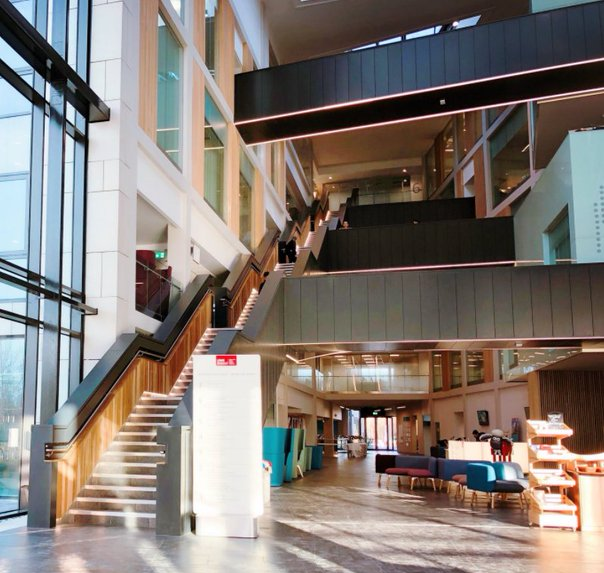
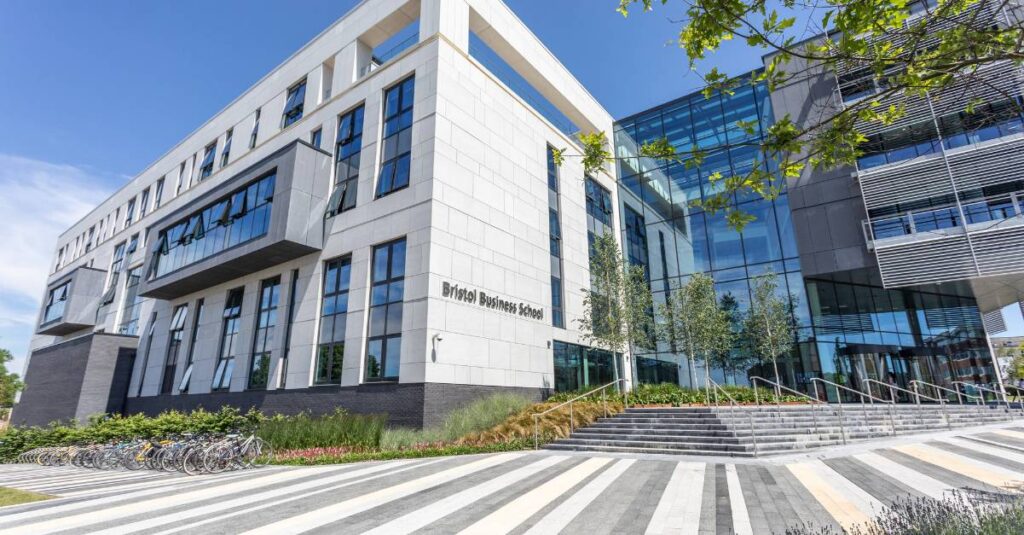
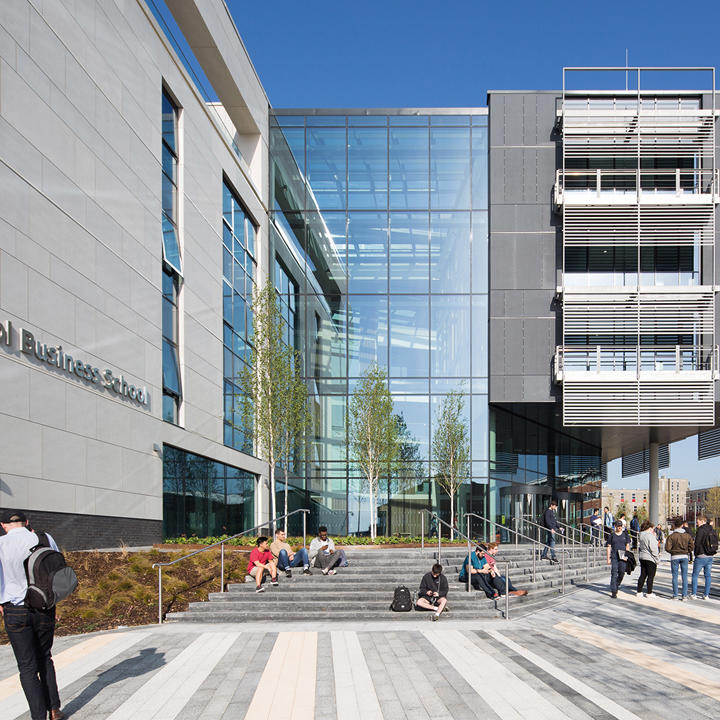
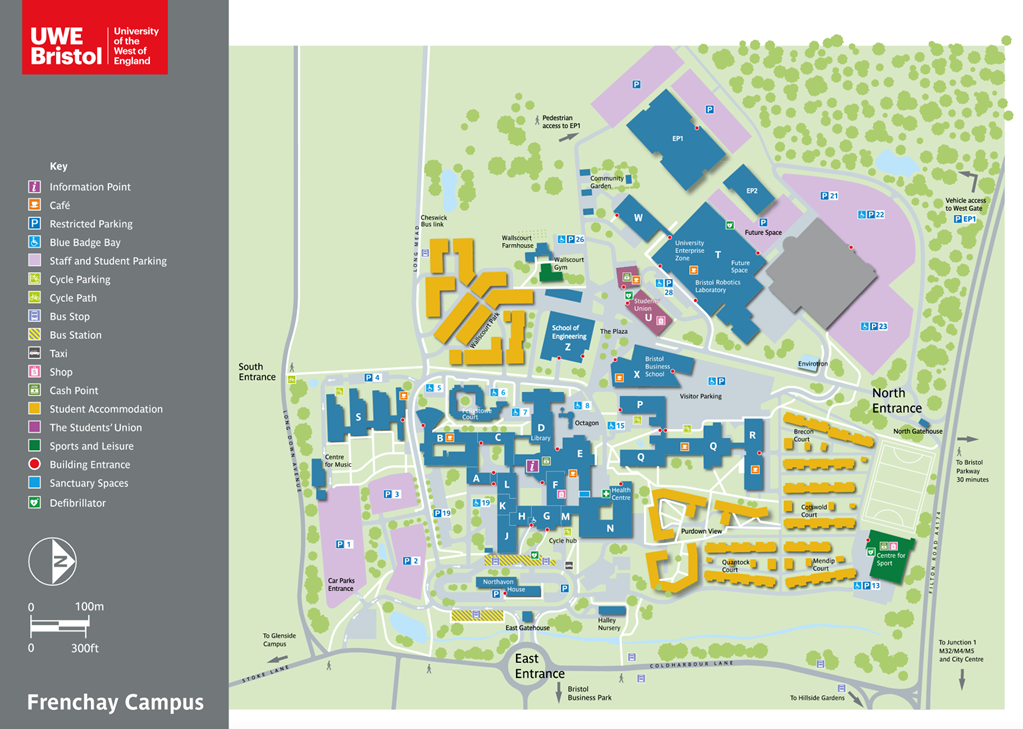
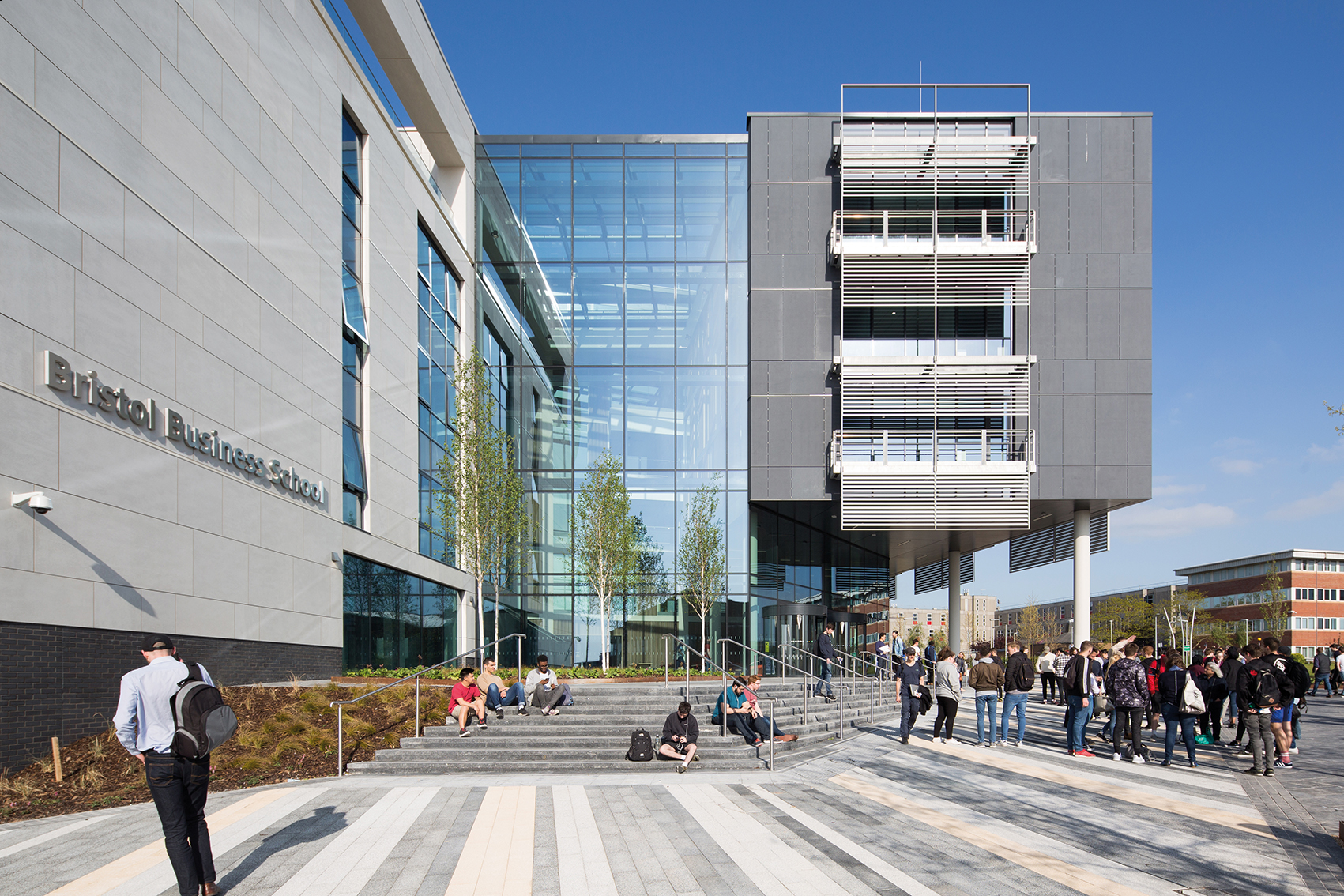
    The conference will take place at the Bristol Business School (X block), University of the West of England (Frenchay Campus) in Bristol (UK) and online. For online participants a Zoom link will be shared closer to the date of the conference. The address for in-person attendees is: UWE Bristol Coldharbour Lane, Frenchay, Bristol, BS16 1QY.

    Click here for the Google Maps link to the conference venue.

    Click here for a high-resolution map of the university campus.

    Getting to Bristol

    Via plane

    Bristol airport  is the closest airport to Bristol. The Airport Flyer bus service connects Bristol Temple Meads and Bristol Airport, with the journey taking approximately 25 minutes. It takes another 30-40 minutes from Bristol Temple Meads to reach the UWE Business School.

    London Heathrow airport for transatlantic and longer flights. It takes about 2.5 hours from Heathrow to UWE Business School using public transport (train and bus), with busses generally being the more affordable option.

    From London Heathrow airport to Bristol by train: Take the Elizabeth line or Heathrow Express to Paddington. From there, take the train towards Cardiff or Swansea. Get off at Bristol Parkway. You can take a bus (e.g. 19 or metrobus m4 or m3 towards the city centre) from here to the Business School (Frenchay Campus).

    From London Heathrow airport to Bristol by bus: Long distance coaches and coaches from London airports: Megabus and National Express provide a very cost-effective service direct to Frenchay Campus from many UK cities and some overseas destinations including London (city, e.g. Victoria, and airports), Cardiff, Birmingham, Exeter, Manchester and Leeds.

    Direct trains go to Bristol Temple Meads from Manchester, Leeds, Sheffield, Birmingham and London (Paddington).

    Getting to UWE Bristol Business School once in Bristol

    Via train

    Bristol Temple Meads is the main train station and is located close to Bristol city centre.

    The nearest train stations from UWE Bristol are: Bristol Parkway (approx. 20-25 minutes walking), or Filton Abbey Wood (approx. 10 minutes walking). From Bristol Parkway it is also possible to take a bus (19, m3, m4 towards the city centre) to the campus.

    It will take about 40 minutes to reach the UWE Business School from Bristol Temple Meads (train ride of approx. 15 minutes, plus walking). Tickets can be bought at the station or online.

    Via bus

    From Bristol Temple Meads, buses operate 24 hours a day and at peak times, leave up to every 8 minutes.

    Buses 72 and 74 will take you from the train station (Temple Meads) to the Business School campus.

    From Bristol Parkway, it is also possible to take a bus (19, m3, m4 towards the city centre) to the campus.

    From the city centre, Metrobus services m1, m3 and m4 are the best way to get to UWE, with buses up to every 10 minutes (Monday – Friday daytime). Bus routes, ticket prices and where to buy the tickets can be found HERE.

    The First Bus app includes a journey planner and offers live bus times so you can check when your bus is due in real time.

    Accommodation

    Accommodation on campus is now available for booking:

    1 night – 1 Night Stay- School of Economics Conference – 09/07 to 13/07 – Room Booking – Frenchay Campus, UWE | University of West of England

    2 nights – 2 Night Stay- School of Economics Conference – 09/07 to 13/07 – Room Booking – Frenchay Campus, UWE | University of West of England

    3 nights –  3 Night Stay- School of Economics Conference – 09/07 to 13/07 – Room Booking – Frenchay Campus, UWE | University of West of England

    4 nights – 4 Night Stay- School of Economics Conference – 09/07 to 13/07 – Room Booking – Frenchay Campus, UWE | University of West of England

    Participants can book up to 4 nights, at the cost of £54 per person per night.

    Participants are expected to include their arrival time when proceeding with the booking, so that keys can be arranged for collection.

    Hotels

    The following websites provide useful information and contact details to help you find the right accommodation during your stay in Bristol:

    1. Visit Bristol
    2. Late Rooms
    3. Holiday Lettings
    4. Trip Advisor

    You can also use Google maps to find accommodation near UWE Bristol campuses, or in the city centre.

    For options in the city centre, some hotel chains offer well-located hotels:

    1. Premier Inn Lewins Mead
    2. Premier Inn Finzels Reach
    3. Ibis Temple Meads
    4. Ibis Bristol Centre
    Call for Papers – AHE 2024 Conference

    Call for Papers

    26th Annual Conference of the Association for Heterodox Economics

    10-12 July 2024 in Bristol, UK

    In collaboration with Bristol Research in Economics and

    The College of Business and Law at the University of the West of England in Bristol

    We invite submissions for the 26th Conference of the Association for Heterodox Economics, taking place on July 10-12, 2024 at the University of the West of England (Frenchay Campus), in Bristol (UK) and online. This is an event organised in collaboration with Bristol Research in Economics at UWE College of Business and Law.  

    Read More